Everyday Norwegian phrases: short conversations for shops, buses and work
यह पेज अंग्रेज़ी और नॉर्वेजियन में उपलब्ध है।
These phrases mean roughly what they say, unlike idioms. The hard part is knowing which one fits, and what to say back. Five ordinary conversations, each with the replies you can use straight away.
At the till
CashierHei! Trenger du pose?
YouNei takk, det går fint.
CashierDet blir 189 kroner. Vil du ha kvittering?
YouNei, det trengs ikke.
CashierHa en fin dag!
YouTakk, i like måte!
Show the English
CashierHi! Do you need a bag?
YouNo thanks, I’m fine.
CashierThat’s 189 kroner. Do you want a receipt?
YouNo, that’s not necessary.
CashierHave a nice day!
YouThanks, you too!
In a café: “Kan jeg få …?”
YouHei! Kan jeg få en kaffe og en kanelbolle?
StaffJa visst. Skal du spise her eller ta med?
YouSpise her, takk.
StaffVær så god.
YouTakk!
StaffBare hyggelig!
Show the English
YouHi! Can I have a coffee and a cinnamon bun?
StaffOf course. Eat in or take away?
YouEat in, please.
StaffHere you are.
YouThanks!
StaffMy pleasure!
Norwegian has no everyday word that works quite like English “please”. The politeness sits in the question, Kan jeg få …?, and in takk. Vær så snill is correct, but in a café it sounds more like pleading than ordering.
On the bus
YouUnnskyld, er denne plassen ledig?
PassengerJa, bare sett deg.
YouTakk.
YouUnnskyld, jeg skal av her.
PassengerÅ, beklager!
Show the English
YouExcuse me, is this seat free?
PassengerYes, go ahead and sit down.
YouThanks.
YouExcuse me, I’m getting off here.
PassengerOh, sorry!
At work
LeneHei! Hvordan går det?
YouBare bra, takk. Og med deg?
LeneFint! Har du fem minutter?
YouJeg har dessverre litt dårlig tid nå. Kan vi ta det etter lunsj?
LeneKlart det.
Show the English
LeneHi! How are you?
YouFine, thanks. And you?
LeneGood! Have you got five minutes?
YouI’m afraid I’m in a bit of a hurry. Can we do it after lunch?
LeneOf course.
YouTakk for i dag! God helg!
LeneI like måte! Vi snakkes på mandag.
Show the English
YouThanks for today! Have a good weekend!
LeneYou too! See you on Monday.
Meeting someone again
Norwegians often thank you for the last time they saw you. Meet the neighbour who had you over for dinner, and the first thing you say is:
Register in one minute
- Use du with everyone: your boss, your doctor, the person at the till. The formal De is rare today.
- First names are normal, at work and with teachers.
- Short is polite. Ja, takk and Nei takk are complete answers; you don’t need to add more.
What would you say?
The cashier asks «Trenger du pose?» You brought your own.Tap to check
Nei takk, det går fint.
Someone thanks you for holding the door.Tap to check
Bare hyggelig! or Ingen årsak!
You meet the neighbour who had you over for dinner last week.Tap to check
Takk for sist!
It’s Friday at four and you’re leaving work.Tap to check
Takk for i dag! God helg!
Your stop is next, and someone is standing in the way.Tap to check
Unnskyld, jeg skal av her.
A colleague asks for help, but you’re on your way to a meeting.Tap to check
Beklager, jeg har dårlig tid nå. Kan vi ta det etterpå?
Hear them in stories
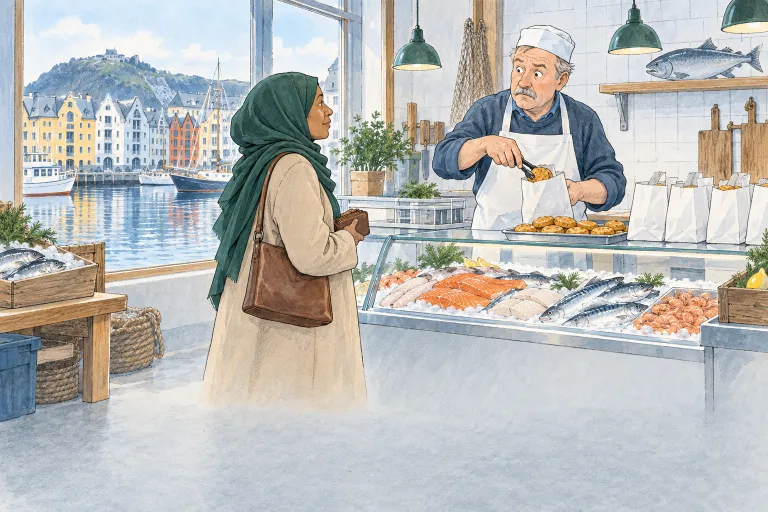
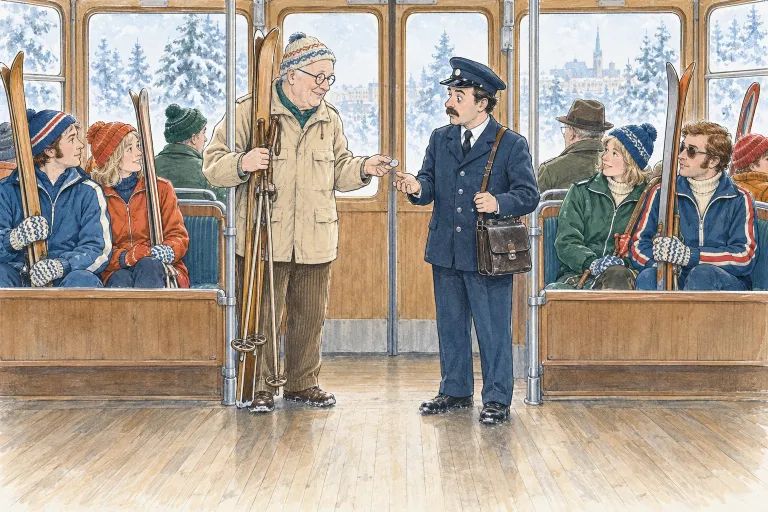
A fish counter, a bus stop, a tram, a first day at work, a locksmith and a passport office: free stories with audio, set in everyday places.